
What the Palmetto State’s Climate Really Grows
You can read a seed packet and you can read a forecast, but the question that decides what actually thrives here is simpler: how cold it gets in your yard in the dead of winter, and how long your soil stays warm enough to push growth before the next cool-down. Work from those two bookends and South Carolina turns into three distinct growing theaters, each with a different set of winners.
The map that truly sets your limits: hardiness zones on the ground
Start with the 2023 USDA Plant Hardiness Zone Map. South Carolina now spans Zones 7a through 9a, which means our typical coldest nights range from 0–5°F in the highest Upstate ridges to 20–25°F along the warmest immediate coast. In practical terms, that is why a kumquat can overwinter on James Island while the same plant gets burned back in Travelers Rest. Coastal communities from Charleston south through Beaufort are commonly 8b–9a, a swath of the Midlands around Columbia runs 8a–8b, and most of the Upstate lies in 7b–8a.
Rainfall helps explain what that means once the heat arrives. Normal annual precipitation sits near 45.3 inches in Charleston County, roughly 48.1 inches in Richland County (the Columbia area), and about 50.2 inches in Greenville County based on 1991–2020 climate normals. That spring and summer moisture, plus overnight warmth, makes warm-season vegetables and subtropicals comfortable in much of the state. The same humidity also accelerates disease pressure, which is why varietal choice and spacing matter more here than in drier climates.
Frost windows by region: when you can plant without a backup
I track the freeze season the same way I track a tropical wave: by the calendar, not by vibes. Along the coast, the urban heat island shows up clearly. In Downtown Charleston (CXM) the average last 32°F freeze lands near February 4, and the average first fall freeze near December 30. Out at Charleston International Airport (KCHS), away from the peninsula’s concrete, the last spring freeze averages around March 27 and the first fall freeze near November 27. That is a two‑month swing in start dates inside the same metro just by moving inland a few miles.
Slide inland to the Midlands and the window narrows a bit but stays long. In Columbia, the average last light freeze falls around March 16, with the first light freeze arriving near November 16. That yields a frost‑free season on the order of eight months, long enough to run warm‑season vegetables to maturity and still slot in a fall crop if you choose compact, quick-maturing varieties.
Push north and the Upstate’s elevation trims the edges. Around Greenville, expect an average last spring frost in the window of late March to early April and a first fall frost near early November, a season typically a few weeks shorter than Columbia and a month shorter than the most protected coastal sites. If you plant peppers or eggplant on a Greenville patio the first warm week of March, you are betting against the climatology; keeping a frost cloth within reach into early April is simply playing the odds.
Heat, rain, and hurricanes: what survives real summers here
Summer heat is not theoretical here; it is a daily management choice. In Columbia, the warmest part of a normal year stacks up with frequent afternoons in the 90s and sultry nights. Fruit set on tomatoes can stall when nights don’t drop much below 75°F. If you want consistent yields in August, choose heat‑set or Florida‑type varieties and plant a second wave in late July for a September–October flush. That second wave works because the average first freeze in Columbia holds off until mid‑November.
Water comes in bursts. The Midlands’ normal annual rainfall near 48 inches still leaves hot, rainless weeks in midsummer. Conversely, the Upstate’s normal near 50 inches often arrives in frontal rain events that soak well and then step aside for a stretch of sun, a rhythm muscadines and peaches use well. Along the coast, roughly 45 inches falls with a summertime thunderstorm bias. That pattern favors shallow‑rooted vegetables if you mulch to keep the swing from flood to crust from stressing roots.
Then there is hurricane season. Officially it runs June 1 through November 30, but the primetime for tropical impacts in the Lowcountry is late summer into early fall. If you keep a fall garden within a few miles of the marsh, choose staking and trellising that can be lowered or detached quickly ahead of a gale. For edible landscapes on the coast, lean toward low‑center‑of‑gravity shrubs (rosemary, bay laurel, dwarf citrus) and keep tall bananas or cassava where they can be cut back without threatening a roofline.
Edibles that behave here
Coast: 8b–9a subtropical edge
This is the state’s citrus and tea belt. Satsuma mandarins, kumquats, and even Meyer lemon can overwinter unprotected in protected courtyards near the harbor; farther inland on Johns Island or Goose Creek, plan on frost cloth for radiational cold snaps. Camellia sinensis is not just theoretical: the Charleston Tea Garden on Wadmalaw Island runs a narrated trolley through the fields for about 35–40 minutes. Tickets currently post at $16 (ages 12+) and $8.50 (ages 4–11) when booked 24+ hours in advance, with a modest bump if you buy inside 24 hours; kids under 4 ride free. The factory tour on the grounds is typically complimentary, a useful way to see how a heat‑loving evergreen responds to this exact maritime climate across the seasons.
Seafood fits the climate story too. The state’s recreational shellfish harvest season on public and state grounds typically opens around October 1 and closes in late May each year, with the exact closing date set annually; one recent season ended on May 28 at half an hour after sunset. That calendar exists because warm summer waters heighten bacterial risk. If you garden near a tidal creek, that same warm‑water window is when salt pruning on windward plants becomes noticeable, another reason to favor salt‑tolerant shrubs on the marsh edge.
Midlands: long, hot, and versatile
With a typical last 32°F freeze in mid‑March and first in mid‑November, Columbia has time for split seasons. Watermelons, okra, sweet potatoes, Southern peas, and long beans are routine performers. Figs and pomegranates shrug off heat and intermittent drought. If you have never put your soil on paper, the state makes it inexpensive to do it right. A standard soil test is currently $6 per sample through the Clemson University Agricultural Service Laboratory in Clemson. The lab’s published address is 171 Old Cherry Road, Clemson, SC 29634, and the results come back with limestone and fertilizer recommendations tuned to South Carolina conditions.
Need plants, starts, or bulk mulch on an early Saturday? The South Carolina State Farmers Market at 3483 Charleston Highway, West Columbia lists year‑round hours of Monday 6 a.m.–6 p.m., Tuesday–Saturday 6 a.m.–9 p.m., and Sunday 12–6 p.m.. Between wholesale sheds and retail vendors you can usually find transplants suited for our heat curve well into summer, plus growers who will tell you which pepper lines kept fruiting for them in last year’s drought week.
Upstate: edge of chill hours and slope
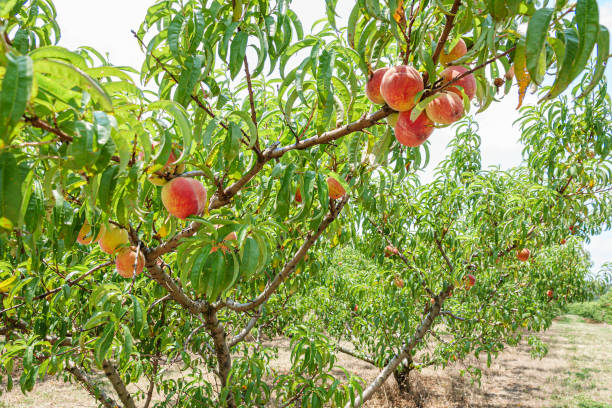
Greenville’s shorter frost‑free season pushes you to think like a mountain gardener who still loves humidity. Blueberries thrive where you can keep the pH low and roots mulched. Muscadine grapes use the warmth of south‑facing fences and ripen through late summer. Peaches and Asian persimmons like the Upstate’s chill hour totals better than the coast’s, and they ride the region’s normal ~50 inches of annual rain if you site them with air drainage. Plan for that average last frost in late March to early April by holding tender transplants under cover until the first week of April, then using black ground cover to bank soil warmth for a strong start.
Where to ground‑truth it locally
Planting calendars are useful, but seeing what local growers bring to market this week is better. The Charleston Farmers Market in Marion Square runs on Saturdays from 8 a.m. to 2 p.m. in season (spring through late fall) and operates an on‑site Information tent that handles SNAP/EBT processing during market hours. If you are new to the Lowcountry, walk a lap in late April and again in mid‑September; the shift in what shows up in crates will tune your fall and winter planting list faster than any chart.
For a hands‑on read on heat‑adapted perennials, the Charleston Tea Garden trolley tour’s 35–40 minute loop and posted ticket tiers of $16 (12+) and $8.50 (ages 4–11) when booked a day ahead double as a living lab on wind exposure, winter burn, and summer vigor in Zone 8b–9a. Pair that with a soil test through Clemson’s lab at $6 per sample and you have both the macro climate and the micro chemistry dialed in.
If you prefer a one‑stop shop closer to the center of the state, the South Carolina State Farmers Market in West Columbia keeps early and late vendor hours most of the week (Mon 6 a.m.–6 p.m.; Tue–Sat 6 a.m.–9 p.m.; Sun 12–6 p.m.). In practice, the best retail selection clusters mid‑morning Saturday, while the earliest wholesale action hums at daybreak. Match that schedule to the week’s forecast; buying transplants the evening before a soaking rain will save you a watering run and stabilize root balls during the first 48 hours.
And if you want a second opinion on timing, Clemson Extension’s Home & Garden Information Center takes calls at 1‑888‑656‑9988 on weekdays during the business day (8 a.m.–4:30 p.m., Monday–Friday). Bring them your frost‑date station, your county, and your soil report, and you will get South Carolina‑specific guidance instead of one‑size‑fits‑no‑one advice.
| Region | Typical USDA zone | Avg last 32°F freeze | Avg first 32°F freeze | What this unlocks | Local touchpoint |
| Coast (Charleston area, airport) | 8b–9a | Mar 27 (KCHS) | Nov 27 (KCHS) | Spring + fall tomatoes, citrus with light protection, year‑round herbs in sheltered courtyards | Charleston Farmers Market, Saturdays 8 a.m.–2 p.m. in season |
| Midlands (Columbia) | 8a–8b | Mar 16 | Nov 16 | Full warm‑season rotation plus fall brassicas; heat‑set tomatoes for August | SC State Farmers Market, Mon 6 a.m.–6 p.m.; Tue–Sat 6 a.m.–9 p.m.; Sun 12–6 p.m. |
| Upstate (Greenville) | 7b–8a | Late Mar–early Apr | Early Nov | Muscadines, blueberries, peaches, fall greens; start warm crops a beat later | Clemson soil test $6/sample for exact pH and lime plan |
Key things to know before you plant
- Find your hardiness zone first. The state spans 7a to 9a, which is why a citrus hedge works on Wadmalaw but not on Paris Mountain.
- Use a nearby freeze station, not just your ZIP. Downtown Charleston’s average last freeze is around Feb 4, but at the airport it runs near Mar 27. That two‑month gap changes everything.
- Budget for a soil test. Clemson’s lab runs a $6 standard test and sends back a South Carolina‑specific lime and fertilizer plan.
- Shop by the local calendar. Charleston’s Saturday market runs 8 a.m.–2 p.m. in season and processes SNAP/EBT on site; West Columbia’s state market keeps 6 a.m.–9 p.m. hours most weekdays.
- Time your fall garden to the first freeze. Columbia’s average first 32°F is mid‑November, Greenville’s is early November, and coastal KCHS holds off to late November.
- Coastal growers: plan for tropical wind. Use trellises you can drop before a gale and choose compact shrubs where salt spray rides in on an east wind.
- Know the shellfish clock if you garden by the marsh. Public grounds typically open Oct 1 and close in late May, mirroring when warm water raises bacterial risk.
Reader Q&A
Can I really grow citrus outdoors here?
Yes, with placement and expectations. In coastal 8b–9a microclimates, satsumas and kumquats can overwinter unprotected in sheltered courtyards, while sites a few miles inland may still need frost cloth on clear, calm nights. The broader inland Midlands and Upstate can keep dwarf citrus in containers to roll into protection on those handful of sub‑25°F nights.
Why do my tomatoes stop setting fruit in midsummer?
Night heat. In Columbia and much of the state, midsummer nights often stay warm enough to inhibit pollination, even when vines look healthy. Choose heat‑set varieties for the midsummer slot and plan a second planting in late July so a new wave flowers into September’s cooler nights ahead of mid‑November’s typical first light freeze.
How different are frost dates between neighborhoods?
They can be dramatically different. In Charleston, the downtown station averages a last freeze near early February while the airport averages late March. That same urban‑to‑inland jump shows up in other cities too. Use the closest station at a similar elevation when building your calendar, not just the city name.
What’s the single best local move if I’m new to gardening here?
Pair a Clemson soil test with one loop through your nearest market at peak season. The test costs $6 per sample and locks in your pH and fertilizer plan; seeing what growers bring to Charleston’s Saturday market or West Columbia’s state market shows you which varieties are actually performing in this year’s heat and rainfall pattern.
Build your crop list around your frost window first, then sort choices by heat tolerance and disease resistance. If you are on the coast, add wind management to that list; if you are in the Upstate, add a week to your spring start and lean into fruits that like a little chill.
Published: September 9, 2026