
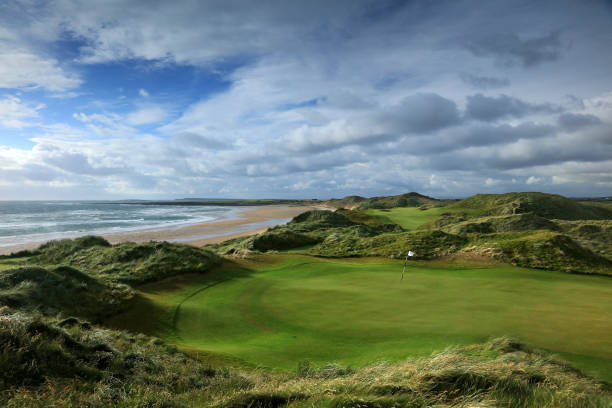
Salt Air, Bent Flags, And Real Numbers: Why Golfers Actually Travel To South Carolina
You don’t pack the sticks and burn vacation days for generic golf. You do it for places that test you, teach you, and treat you right at check-in. That’s the South Carolina draw in one sentence. Wind-whipped resort majors at the coast, value muni golf that punches up, and a buddies-trip menu so long you need a yardage book for the options. Let’s talk specifics, not slogans.
What South Carolina delivers that other golf states don’t
The hook is range. Within a five-hour drive you can play ultra-demanding seaside championship setups, dense pine-and-marsh Lowcountry designs, and a municipal course that posts its rates online like a scoreboard. On the same trip you can chase a number from the tips, then take the family to a night range that tracks your ball like a TV broadcast.
That last line isn’t hype. On Hilton Head Island, the Robert Trent Jones Course at Palmetto Dunes runs a Toptracer-powered public range with 14 bays, a loyalty deal where the 6th large bucket is free after you buy five, and typical large buckets around 100 balls. Juniors benefit too: Palmetto Dunes’ current policy lets kids 10 and under play free after 4 p.m. with a 1:1 paying adult. That’s not a coupon; it’s a family-friendly door into a serious golf resort.
Meanwhile, an hour up the coast from Charleston, two Pawleys Island heavies — Caledonia Golf & Fish Club and True Blue Golf Club — split the difference between resort polish and daily-fee access. Caledonia confirms it’s public, notes walking availability depends on the day’s schedule, and includes range access at True Blue with every paid round at Caledonia. True Blue adds a wrinkle of its own: SoloCart single-rider carts available by advance request, which is a pace-of-play cheat code for that buddy who drifts into the trees.
High-stakes wind and caddie culture at Kiawah Island
If you want a round that lives on your group text forever, the Ocean Course at Kiawah Island Golf Resort is your headline act. The resort states it plainly: the Ocean Course is walking only most of the year. During the summer months (June through August), carts are permitted for tee times after 10 a.m. and restricted to paths — and when you use a cart in that window, a forecaddie is required. If you walk, caddies aren’t mandatory but the resort “highly recommends” them, and it publishes recommended gratuities of $120 per player for walking caddies and $60 per player for forecaddies.
That’s the cultural difference people travel for. In steady ocean wind, having a caddie call a flight window and commit you to a number beats guessing by three clubs all day. It’s not just service; it’s shot value. And because this is a resort-run caddie program, you book through the Ocean Course golf shop, not a third-party, which keeps the experience consistent from first tee to last rake.
Want to round out a Kiawah day? The resort’s other courses — Cougar Point, Turtle Point, Osprey Point, Oak Point — offer the same booking platform and optional caddie services as staffing allows. If your crew has mixed skill levels, that flexibility matters. But if you came for the test, you already know which first tee you’re walking to.
Hilton Head’s playable logistics: gate fees, junior breaks, and range nights
Here’s a practical truth you won’t find on a postcard. To reach Harbour Town Golf Links for a tee time, dinner, or a lighthouse selfie, you enter the Sea Pines community as a visitor. Sea Pines’ current gate policy sells passes at the Greenwood or Ocean gates from 7:00 a.m. to 11:00 p.m. A daily visitor pass is $10 per vehicle and a weekly pass is $30. That pass is separate from your Harbour Town green fee and it exists whether you’re here to play, shop, or just look at the 18th green. Daily visitors not staying inside Sea Pines are not permitted to enter by bicycle, which matters if you thought a beach-cruiser could skip the line.
Tournament calendar matters too. Harbour Town hosts the PGA Tour’s RBC Heritage each spring, and the resort blocks public play during tournament operations. Build around those dates, not into them. If your itinerary pivots to the other two Sea Pines courses, that’s not “settling.” Atlantic Dunes by Davis Love III and Heron Point by Pete Dye are proper championship tests that share Sea Pines’ on-island logistics.
Back across the island, Palmetto Dunes keeps families and practice fiends happy. We already covered the kids-10-and-under-free-after-4 policy and the Toptracer range’s loyalty deal. The resort also publishes seasonal maintenance windows for its courses, like the Robert Trent Jones Course aerating greens in early June this year. Check those dates before you set a once-a-year tee time; that’s the difference between a trip highlight and a “we’ll come back next year” shrug. Dress code is simple and enforced: collared shirts on all three courses.
Why Myrtle Beach still wins the buddies-trip math
“Buddies trip” means options and value. The Grand Strand starts handing you both the second you open a tee sheet. TPC Myrtle Beach, in Murrells Inlet, books online on its own site and doubles as a bragging-rights stop: the facility is the host of the Monday qualifier for the PGA Tour’s Myrtle Beach Classic this year. You can point to that starter sign and tell your group you played the same fairways hopefuls walked to chase a Tour tee time.
Drive south 30 minutes and the Pawleys Island pair takes over. Caledonia states publicly it’s a par 70 at 6,526 yards, with walking subject to that day’s schedule. True Blue answers the speed golf crowd with SoloCarts by advance reservation. Both courses sell direct tee times and group packages under the Caledonia Golf Vacations banner, which is how larger groups stretch budget without mystery “dynamic” add-ons. And don’t gloss over the range detail: a paid round at Caledonia includes use of the True Blue range, which is a real-world warmup fix if your group booked a tight morning turn.
If it’s your first Myrtle trip, that’s your triangle: a former Tour site at TPC Myrtle Beach, one Mike Strantz original at Caledonia for the cerebral shot-making, and one round at True Blue to answer “who’s long?” with no excuses. As for formats, Myrtle is made for replays and 36-hole days. Courses regularly set replay pricing tiers that drop as the sun drops. Book your first round early, keep hydration on the cart, and let the second round price come to you.
The muni that proves Charleston’s golf IQ
Charleston’s Municipal Golf Course isn’t a concession-stand muni with scraped tees. It’s a strategic, regularly maintained golf facility that publishes its numbers like a major-league scoreboard. The city’s current 2026 posted rates show a Regular (Non-Resident) walking rate of $68 any day, with a riding total of $90. Regional residents and city residents have their own discounted tiers. Tee times for everyone open seven days out at 7 a.m. online. There’s no guessing game or “call for price” dance; it’s there in writing.
The junior policy is equally clear. Beginning February 1, 2026, juniors can play for free green fees under a Youth Green Fee Program when they register for the program and pay a $30 annual fee. Unregistered juniors pay a small posted green fee. It’s simple, it’s public, and it turns the city muni into the easiest “first real course” in the region for a kid who outgrew pitch-and-putt.
What does that mean for your trip? If you’re flying into Charleston and your group lands on a Friday, the Muni becomes a pace-setter. It’s the round that shakes the plane out of your swing without torching the budget. If you picked Kiawah as your “main event,” you’ll appreciate how the Muni’s wind corridors and short grass around the greens prep your eyes for seaside shot selection.
Side-by-side: who fits which tee time
| Course | Where | Public access | Concrete policy or fee | Useful angle |
| The Ocean Course, Kiawah Island Golf Resort | Kiawah Island | Resort public | Walking only except June–August after 10 a.m. carts on paths; forecaddie required with carts; $120 per-player recommended tip for walking caddie, $60 for forecaddie. | Book caddie through the Ocean Course shop and lean into the wind reads. |
| Harbour Town Golf Links | Hilton Head Island (Sea Pines) | Resort public | Sea Pines visitor gate open 7:00 a.m.–11:00 p.m.; $10 daily pass or $30 weekly per vehicle; daily visitors can’t enter by bicycle. | Plan extra time for the gate and avoid tournament-week closures. |
| Robert Trent Jones Course, Palmetto Dunes | Hilton Head Island | Public resort | Kids 10 and under play free after 4 p.m. with a 1:1 paying adult; Toptracer range has 14 bays and a “buy 5, get the 6th large bucket free” loyalty perk. | Family-friendly twilight round and data-driven range session in one stop. |
| Caledonia Golf & Fish Club | Pawleys Island | Public daily fee | Walking availability varies by day’s schedule; paid round includes True Blue range access. | Book Caledonia first, True Blue as your same-day or next-day complement. |
| True Blue Golf Club | Pawleys Island | Public daily fee | SoloCart single-rider carts available by advance request; call ahead to reserve. | Ideal for mixed-pace groups and “cart path only” days. |
| TPC Myrtle Beach | Murrells Inlet | Public daily fee | Facility is the 2026 Monday qualifier host for the PGA Tour’s Myrtle Beach Classic. | Cred-worthy stop for buddies trips chasing Tour-adjacent venues. |
| Charleston Municipal Golf Course | Charleston | Public muni | 2026 posted non-resident rate is $68 walking any day and $90 riding; tee times open 7 days out at 7 a.m.; juniors play free with a $30 annual registration. | Budget-stable round to start or finish a Charleston trip. |
Quick takeaways for planning your South Carolina golf run
- If Kiawah’s Ocean Course is on your list, decide upfront: pay for a walking caddie and embrace the elements, or book a late-morning summer slot if you need a cart with a required forecaddie.
- Driving to Harbour Town means clearing the Sea Pines gate. Budget $10 per-day or $30 per-week vehicle entry during 7:00 a.m.–11:00 p.m. gate hours.
- Traveling with kids? Palmetto Dunes lets 10-and-under juniors play free after 4 p.m. with a paying adult, and the Toptracer range can turn a non-golf day into a memory.
- Chasing value around Charleston? The Muni’s $68 non-resident walking rate and 7-day-out/7 a.m. booking window make it the most predictable line item in the city.
- Myrtle Beach groups: pair one “credential” round at TPC Myrtle Beach with Caledonia and True Blue. Use True Blue’s SoloCart if your foursome plays at different speeds.
Reader Q&A
Do I have to take a caddie at the Ocean Course?
No. Kiawah says walking caddies are highly recommended but not required when you walk. In summer (June through August) if you take a cart after 10 a.m., a forecaddie is required. The resort publishes recommended tips of $120 per player for a walking caddie and $60 per player for a forecaddie.
Is there a separate fee just to get to Harbour Town?
Yes. As a visitor driving into Sea Pines you’ll buy a gate pass at the community gate during 7:00 a.m.–11:00 p.m. hours. The current fee is $10 per day or $30 per week per vehicle, which is independent of any Harbour Town green fee.
We’re bringing kids. Where can we play without blowing the budget?
On Hilton Head, the Robert Trent Jones Course at Palmetto Dunes lets kids 10 and under play free after 4 p.m. with a paying adult. In Charleston, the city Muni’s junior program offers free green fees to registered youth players for a $30 annual registration fee.
What’s the smartest first round if we’re flying into Charleston?
Charleston Municipal. The $68 non-resident walking rate, the transparent posted pricing, and the 7-day-out/7 a.m. booking window make it easy to lock. It’s a clean way to get your pace and yardages right before a higher-stakes day at Kiawah.
Still torn? Anchor your trip around one “identity” round — the Ocean Course for caddie-and-wind golf, Harbour Town for shotmaking and galleries, or Caledonia for artistry — then fill the rest with practice-friendly and price-stable options like Palmetto Dunes and the Charleston Muni. That mix travels well, whether your index has a plus sign or a lot of stories.
Published: September 4, 2026