
Inside the Columbia Museum of Art: What you’ll actually see and how to time your visit
You do not need to know your Botticelli from your Botticelli to enjoy this place. Step off Main Street and you are in a lobby framed by Boyd Plaza on one side and a cascade of glass by Dale Chihuly on the other, a reminder that this museum treats the entrance like a gallery. If you are the plan-ahead type, note the hours before you come through the door: Tuesday through Saturday 10 a.m.–5 p.m., Sunday noon–5 p.m., closed Mondays, and open until 7 p.m. on Thursdays with an extra hour to 8 p.m. on First Thursdays. The last ticket is sold 30 minutes before the galleries close, so a 4:35 p.m. arrival will make your stroll brisk.
The museum sits at 1515 Main Street in the heart of downtown. If you are circling for a spot, on-street parking is plentiful and free on Saturdays and Sundays. Prefer a garage with shade and signage you can see from a block away. The PJ Cannon Garage at 1227 Taylor Street has a pedestrian path that pops you out by Main, and garage parking is also free on weekends.
Start on Main Street: how the museum flows from plaza to galleries
Before you even scan your ticket, Boyd Plaza is part of the experience. It was renovated in 2019 and functions like the museum’s front porch, with seating, shade, fountains, and occasional programs tied to First Thursday on Main. Photography on the plaza is free and open to all, which is handy if your group tradition is one posed shot before any art viewing happens.
Inside, the lobby’s color and polish lead you to the Welcome Desk. You can pick up a free multimedia tour on your own device or borrow an iPad at the desk, which is useful if you like short audio stops rather than reading wall labels. If you are managing gear, the self-serve coat check and storage cubbies come in handy, but there is a limit on what comes upstairs: bags larger than 14.5 x 17 x 8 inches stay out of the building, and backpacks need to be carried by hand or worn on the front in the galleries. Umbrellas wait in the stands near the lobby and coat closet.
If you are here with kids or you are a creative adult who likes to touch things, look for The Cross Hatch, an all-ages interactive gallery where making and play are the point. Admission to The Cross Hatch is included with your museum ticket, and as with the rest of the building, members get in free. This space sits near the Main Street lobby and has a nearby single-stall family restroom. Snacks are allowed in the lobby, not in the enclosed galleries.
Room to room: what is actually on view
This is the state’s only art museum with an international collection, and the scope shows. The museum’s collection is presented across 27 galleries with four main collecting areas: American, Asian, European, and modern and contemporary art. The galleries were recently reinstalled and relit, so returning visitors notice updated layouts and thematic groupings alongside classic chronology. You will see a mix of period galleries and artist-focused spaces, plus rooms curated around ideas like landscape or still life rather than one era.
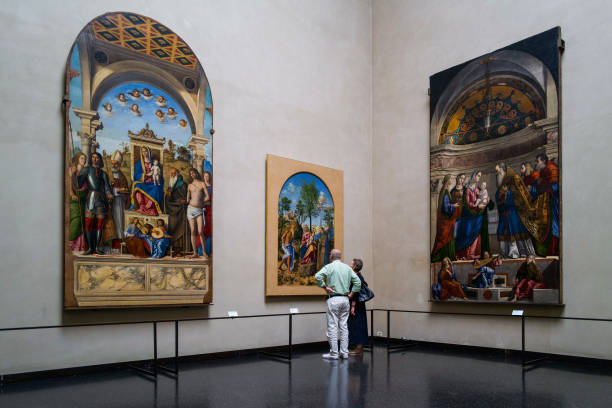
Two touchstone works anchor many first-time visits. Claude Monet’s The Seine at Giverny (1897) offers the shimmer and softness that made his late landscapes famous. In the Italian Renaissance galleries, Sandro Botticelli’s The Nativity is both rare and specific. It is the only Botticelli fresco displayed outside Italy and comes from the museum’s deep holdings from the Samuel H. Kress Foundation. If your goal is to see these two, ask at the desk for the most direct path. The galleries are compact, but a targeted route helps if you are fitting the museum into lunch hour or before a show at the Koger Center.
Expect to find a South Carolina thread. Jasper Johns has a dedicated presence here thanks to his long relationship with the museum, which began in the early 1950s when he was stationed at Fort Jackson. Depending on rotation, you may encounter his prints and works in dialogue with contemporaries he helped bring into the collection, like Robert Rauschenberg or Josef Albers. You are also likely to spot modern and contemporary pieces by artists connected to the region, such as Rodney McMillian’s probing installations or Sam Gilliam’s color-driven abstraction.
Look for the museum’s recent interpretive additions. A gallery hung salon-style makes the act of looking a little more playful and shows how paintings once competed for attention on crowded walls. Elsewhere, an Asian art gallery anchored by gifts of Chinese works brings Tang dynasty craftsmanship into a conversation with modern pieces across the floor. A newly created Georgian-period room installs decorative arts and painting with period-appropriate wall treatments, offering a small, immersive time capsule. All of this lives alongside sculptures, photographs, design objects, and quiet favorites like Washington Allston’s early landscape, so a single pass can deliver a survey without feeling like homework.
Photography for personal use is allowed in public spaces and most galleries, but there is a line you cannot cross. Leave flashes, tripods, selfie sticks, and video rigs at home. If you need commercial filming, that is by prior written approval only. The guard who asks you to turn your backpack to the front or your camera flash off is not being fussy. They are following rules that keep a Botticelli safe and a family field trip pleasant at the same time.
Make the most of your ticket: prices, free programs, and when to go
If you like simple numbers, here they are. Adult admission is $15, adults 65+ are $13, college students are $10, youth ages 7–18 are $10, and children 6 and under are free. Members get free general admission year-round. If you are booking a group of 10 or more and want a docent, guided tours are $12 per person, which includes admission and lets you stay afterward as long as the museum is open that day. K–12 school tours run $5 per student with one adult free for every 10 students.
There are several ways to visit for free that do not hinge on chasing last-minute discount codes. The museum observes First Thursday on Main with free admission and extended hours once a month. Active-duty military personnel, including National Guard and Reserves, and their families receive free admission from Armed Forces Day through Labor Day through the Blue Star Museums program. If you have a SNAP EBT card, the Museums for All program grants free admission for up to four people. And if you hold a Bank of America, Merrill, or Bank of America Private Bank credit or debit card, you get free collection admission on the first full weekend of each month through Museums on Us with your photo ID.
Summer has its own rhythm. Each year the museum announces a summer window where South Carolina residents enjoy free general admission with proof of residency. The current season’s dates are posted on the Visit page and, this year, run May 22–September 6. If you are reading this outside that window, check the same page for the next season’s dates before you drive downtown.
Which option is right for you depends on what kind of visit you want. A weekday morning can feel like you have the galleries to yourself, while First Thursday adds energy and the opportunity to linger into the evening. If you prefer structured looking and conversation, the docent-led group tour gives you the most for your dollar and time.
| Visit option | Who qualifies | When | Price | What you get |
| Standard admission | Everyone | Tue–Sat 10 a.m.–5 p.m., Sun noon–5 p.m., Thu until 7 p.m. | Adults $15; Seniors 65+ $13; College $10; Youth 7–18 $10; Ages 6 and under free | All open collection galleries and most exhibits; last ticket 30 minutes before close |
| First Thursday at the CMA | Everyone | First Thursday each month | Free | Free admission and extended hours to 8 p.m.; events often spill onto Boyd Plaza |
| Museums for All | SNAP EBT cardholders | Year-round | Free for up to four people | General admission to the collection; show your EBT card at check-in |
| Blue Star Museums | Active-duty military and families | Armed Forces Day through Labor Day | Free | General admission during the summer window |
| Museums on Us | Bank of America, Merrill, or Private Bank cardholders | First full weekend each month | Free | Free collection admission with active card and photo ID |
| Docent-led group tour | Groups of 10+ | By reservation | $12 per person | Guided experience plus the ability to keep exploring after the tour |
| K–12 school tour | School groups | By reservation | $5 per student | Inquiry-based tour aligned to state standards; required chaperones free |
Small but useful details visitors ask about
Sketching and photos
Pencils only, paper no larger than 14 x 17 inches, and no easels. That is the sketching rule set for the second-floor collection galleries, with similar permissions in most exhibitions. During busy times staff may restrict sketching to keep doorways and sightlines clear. Still photography is allowed for personal use in most spaces, but turn the flash off and leave tripods, monopods, selfie sticks, and video cameras out of the galleries.
Accessibility and family gear
Entrances and interior public spaces are barrier-free and wheelchair accessible. Complimentary wheelchairs, rollators, strollers, and lightweight stools are available at the Welcome Desk on a first-come basis. Two disabled parking spaces are located just off Main Street adjacent to the building. If you prefer a sensory-friendly strategy for young visitors, ask for Art Explorer bags at the desk. Restrooms include multi-stall options on each floor and single-stall and family restrooms near the Main Street lobby.
Parking and food logistics
If you are arriving for a weekend, on-street meters in the area and the PJ Cannon Garage both waive fees on Saturdays and Sundays. Weekdays are pay-to-park by station or app. Inside the museum, food and drink are permitted in public lobby areas but not in enclosed galleries. The Cross Hatch is close to the lobby if you need a break with little ones between galleries, and there is seating both indoors and across Boyd Plaza. If you are planning a day with multiple stops downtown, remember the museum sells the last ticket a half hour before closing, so place your visit accordingly if you want time for the modern and contemporary rooms after a long look at Botticelli.
Events and music
Beyond the galleries, the museum regularly programs concerts that range from chamber music to contemporary jazz, talks with curators and artists, and social events that use the lobby and plaza as a stage. The schedule changes monthly. If a specific performance is part of your plan, check the events calendar and purchase tickets in advance, then build your gallery visit around it. Staff will steer you to the right entrance if an event uses Boyd Plaza or the Atrium after regular hours.
Key things to know before you go
- Address the basics first: 1515 Main Street, Tuesday–Saturday 10 a.m.–5 p.m., Sunday noon–5 p.m., Thursday open to 7 p.m. and to 8 p.m. on First Thursdays; last ticket is sold 30 minutes before closing.
- Standard admission is $15 for adults with published discounts for seniors, students, and youth; several programs offer free entry including First Thursday, Museums for All, Blue Star Museums in summer, and Bank of America’s Museums on Us weekends.
- You can target highlights quickly: Monet’s Seine at Giverny, Botticelli’s Nativity, and the lobby Chihuly installation are all on regular view. Ask at the desk for the most direct route.
- On-street parking and the PJ Cannon Garage are free on weekends, and both are a short walk to the Main Street entrance.
- Sketching is welcome with pencil only, paper up to 14 x 17 inches. Photography is allowed for personal use, but no flash, tripods, or selfie sticks.
- Traveling with kids. Plan a stop at The Cross Hatch interactive gallery. Snacks are fine in the lobby, not in the galleries. Family and single-stall restrooms are near the Main Street lobby.
Reader Q&A
Is there a best time to see the Monet and avoid crowds?
Tuesday or Wednesday mornings are typically the calmest, and the quickest path is to ask the Welcome Desk for a highlights route. If you prefer evenings, First Thursday adds an extra hour to 8 p.m. and can be lively, so arrive on the earlier side of the night to linger in front of the painting.
Can my teen sketch in the galleries?
Yes. Pencils are allowed in the second-floor collection galleries and most exhibitions, with paper up to 14 x 17 inches and no easels. If it gets crowded, staff may ask sketchers to relocate so doorways and sightlines stay open for everyone.
What is the simplest way to visit for free if I do not qualify for a discount?
Plan around First Thursday on Main. The museum waives admission and stays open until 8 p.m. that evening each month. If your calendar is rigid, check whether your bank card is eligible for Museums on Us on the first full weekend of the month.
Is the museum manageable with a stroller and a toddler?
Yes. Entrances and public spaces are barrier-free, you can borrow a stroller or lightweight stool at the Welcome Desk, and there is a nearby family restroom off the Main Street lobby. The Cross Hatch interactive gallery is designed for hands-on breaks between quieter rooms.
If you want a quieter look at the collection, pick a weekday morning and go straight to the highlights. If you want energy and free entry, aim for First Thursday, start in the Italian Renaissance rooms before the evening crowd thickens, and finish outdoors on Boyd Plaza.
Published: September 4, 2026